

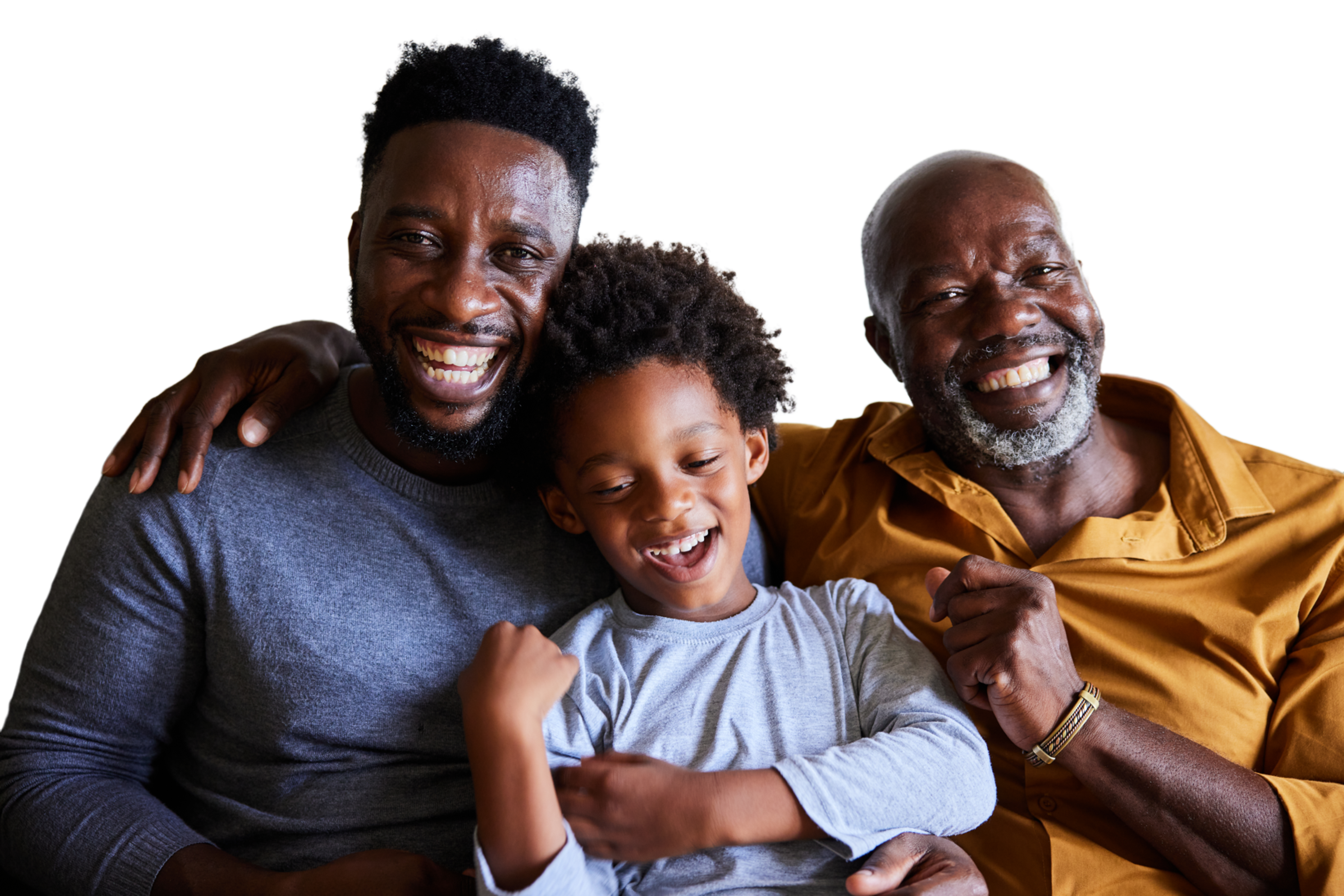
Patients share how staying active, adapting to treatment side effects, and maintaining a positive, purpose-driven mindset have helped them live well with prostate cancer. They emphasize the importance of working closely with experienced specialists, focusing on overall well-being, and continuing to enjoy life while navigating treatment.
Roland Bessette:
I retired as of May 2nd, so first things I'm doing as a retired person is taking care of my prostate. It wasn't exactly what I had always expected when I retired, but it is what it is. And while we were doing all of this, in one of our meetings with Dr. Morgans, we explained that, gee, we hadn't put in our full money yet for... We're going to have a cruise.
We had already planned to have a cruise starting January 2nd down to the Caribbean." And they said, well, should... We asked and said, "Well, gee, should we really go and stuff?" She says, "Yeah. By then?" She says, "Go." She goes, "No, don't worry about it." She says, "The way things are going," she says, "you'll be fine. You'll be able to go on the cruise, and don't worry about it."
Mike Hoppel:
My plan was to be very active. I continued with work full-time. And, at work, they gave me options to not have to work at all. I said, "No, I can't do that. I cannot sit down. I must be working." And so I said, "I'm going to do a hundred runs at least, and then I'm going to break at least 400 miles." And, last Saturday-
... September 10th, I ran Sherry's Run. It's a fundraising for cancer in Lebanon, Tennessee. And I run four other ones. This was the fifth one. I wanted to run the second time for those that couldn't run. And I lost a friend about three weeks ago in a car wreck. He died. He was one of our managers at Lowe's, and I wanted to run for him also.
Harold Recard:
There are side effects to the enzalutamide that sometimes just tend to make you wonder about whether it's worth it or not. The fatigue at times is just crushing. I sat with Dr. Cleary. I said, "Look," I said, "I just need to know so I can make the right adjustments in my head. But is this the new normal for me? Is that what this is? Is this the new normal for me or is this going to go away?" But I need to know so I can get through this, what I need to do to get through it.
And we had a very, very frank discussion. And we decided that, if you were living a, I don't know, 15, 16-hour day before, that's not going to happen. That's just not going to be what happens to you from now on because you will run out of gas somewhere between 10 and 12 hours period. You just won't be able to do that. And it's not a matter of there's anything wrong with you, it's just that that's what's keeping you alive, and you got to make some compromises for that.
And, some days, I feel really, really great and maybe I can go 12, 13 hours. Other days, I don't feel really, really great and maybe I only go eight hours, but I'm here. That's just what has to happen for your body to fight this. And I asked not Dr. Cleary, but I asked his PA I think two times ago when I was in for my quarterly. I said, "Just tell me." I said, "Does the enzalutamide mean that I don't have prostate cancer anymore or does the enzalutamide just mean that it's killing the prostate cancer but I'm still having all the effects of prostate cancer?" And she said, "Really," she said, "you have had prostate cancer for 24 years. And your body has been fighting prostate cancer for 24 years." Now, some people say, "Oh, my God," but I look at that as saying, "Geez, that's a real accomplishment that I'm able to play with my grandchildren."
Doug Kroc:
I have been walking every single day since January 1st at least a couple of miles. I've recently started playing golf again. And I'm walking, playing golf, and I've just been able to stay active. I'm a guy that sort of goes into my workshop in the basement and tinkers. I essentially built my house and my garage and my tractor shed, and so I like to build and maintain and so on. So I've been able to do all that through chemotherapy. I haven't lost my appetite. I haven't been nauseous. And so, again, that was the thing I was sort of the most afraid of. And I spoke to a lot of people that had gone through and asked what to expect.
Peter Koskovich:
But I think, for the most part, just having a holistic approach to my treatment and trusting amazing doctors that know specifically about prostate, I don't need somebody that is an oncologist for everything. I need a prostate doctor. And now that the fact that it is in my bloodstream or it is in my body metastasized, I'm still focused on looking at doctors that can specialize on the prostate side. That is pretty much where I believe having a great doctor, taking care of myself, because nobody owns me except me and nobody knows me better than me.
So I choose not to ever use the words "fight cancer". I use the mindset of, "Cancer does not define me. I will define how my body responds to stress and emotions," and being just mindful of where I'm at. And I think that's helped me a lot. That's sort of where I'm at these days, and I believe that I went from being told some very sad news to making it a reality that I'm a living and walking survivor right now.