

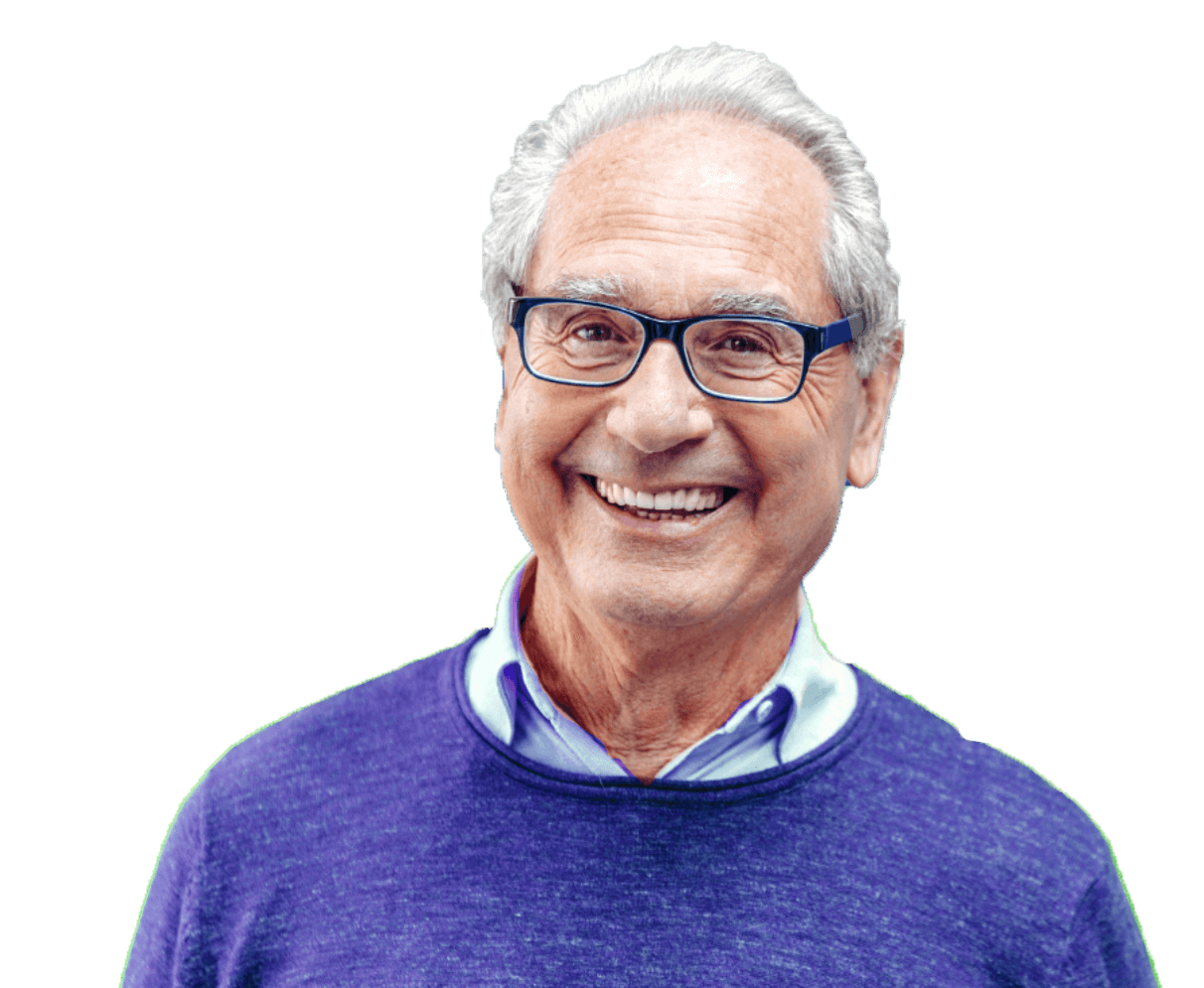
Andy shares how thoughtful treatment decisions, ongoing communication with trusted specialists, and an active lifestyle have helped him navigate biochemical recurrence and metastatic prostate cancer over many years. He emphasizes the importance of seeking expert opinions, staying physically active, balancing quality of life with treatment, and focusing on living well while adapting to long-term hormone therapy.
Andy Schwartz:
... who had been through prostate cancer treatment. And I figured out what I wanted to do. I met a lot of doctors. I met with Peter Carroll over here over at UCSF, and I met with some other fellow whose name I don't remember, who was, I think, I don't remember his name, at UCSF. Then I finally wound up going through treatment with seeds, radiation seeds and radiation and hormone therapy for the first year. And it worked for a while and I was fine. I was concerned about the side effects of the surgery, to be honest with you. I was in a new relationship, relatively new, and I cared about that stuff, and I still do.
Then I was moving along just fine. And then sometime around 2013, 2014, I had a routine life insurance exam and I had a detectable PSA, which made no sense because my PSA was zero up to that point and no one quite understood why. And then I don't remember the exact details of all of this, but I found my way to Chuck Ryan in November of 2014 and it was determined that I had what they refer to as a biochemical recurrence. No tumors, no evidence of cancer other than an elevated PSA. Then I began hormone deprivation therapy. Chuck Ryan and I became pretty good friends to be honest with you. I consider him a good friend and I think the feeling's mutual. I'm pretty sure the feeling's mutual. And he pulled a fast one and moved to Minnesota several years ago and is making me go visit him there, but that's all right.
I've got another doctor here named Hala Borno who is... I like to tell it to her face I think that she's from God. I love her so much. She's this incredible young woman. I don't mean to be disrespectful, but she's my daughter's age probably. She's got three children and she is just an incredible human who's taking great care of me. So Chuck and I decided that I was going to go on intermittent hormone deprivation therapy, which means you're on and you're off, and it's better than being on all the time. And currently at this moment I'm off. And what if my testosterone to come back? And that's the journey in a nutshell, but I could give you more details if you want it.
Interviewer:
So how is it being on intermittent hormone therapy? What's the difference between being on and off for you in terms of how you experience it?
Andy Schwartz:
Well, it's like being happy or being sad. I mean, it's not literally that, but it's sort of like that. Athletics are a big part of my life. I'm a bike rider, I'm a skier, I'm a tennis player, and you're not as strong when you're on hormone therapy. You lose your sex drive, and that's not good even at my age. You're more tired, but I don't even notice that anymore to be honest with you. I mean, it's been going on since 2014. And it's controversial. I mean, there are a lot of doctors who wouldn't go along with this, but Chuck and Hala are fine with it, I think. At least that's what they tell me. And it's better to be off the therapy than on, but it's better to be alive than dead. So that's the trade off. And you're thinking about it a lot and it's one of those things.
What can I tell you? It's the hand I was dealt. I don't feel sorry for myself by any stretch of the imagination. I'm pretty happy, but you got to think about it.
Well, yeah, I guess, but it also works. So it's hard to say that it's a real curse. I mean, it's what you have to deal with. It's part of your life. It's the hand you've been dealt. And I was dealt a great hand and I'm not complaining.
Interviewer:
So tell me about like, how does your life change when you're on versus when you're off?
Andy Schwartz:
Well, there's the intimacy part of it, which is a huge part for me, and for my wife, I would imagine. And that's the biggest part. I mean, I feel stronger. I get a lot of exercise. I'm very committed to it. I work out six to seven days a week. I do something six to seven days a week and being fit is important to me. And you're stronger when you have your testosterone, you get your muscles back. And I don't like being physically weak. I want to be the guy on the airplane who helps the person put their bags in the upper and in the large compartment above. And I still am that person and I want to continue to be that person. I don't want to be the person who gets help. I want to be the one who does the helping.
I am sometimes. I also want to give the proper respect to my Pilates instructor. I do Pilates three times a week and that really helps. It helps. When you get older, you have balance issues, you have strength issues, and Pilates for balance and strength. It's not as much strength. It's balance and stretching. They're really important. I do Pilates three times a week and that helps a lot too. And I would recommend that for anybody.
Interviewer:
When did you start Pilates?
Andy Schwartz:
2017.
Interviewer:
Wow.
Andy Schwartz:
And I do it a lot. And I really like it and it's made a big difference in my life. Well, balance is an issue when you get older.
Interviewer:
There's no doubt.
Andy Schwartz:
And strength too. But I'm not as strong as I was. I mean, I'm not back to where I'm going to get after my testosterone comes back. I just went off in December, so it's not like I'm back yet, but I'm going to come back. And like I said, it's controversial and you've got to keep a real close eye on it. And in the interim, I've had radiation treatments for cancer and lymph nodes in my chest. I don't know if they're... They weren't in my lungs, but they were somewhere in that area. There was prostate cancer that had metastasized, metastatic prostate cancer, which is what I have. Now, hopefully a year on, a year and a half off, hopefully, but it's very, what's the word, fluid. You just never know. You got to keep a real close eye. And fact of the matter is they told me to have my PSA checked every 30 days, but then they said if you want to wait in 60 to 90, that's fine too. And day 30 is tomorrow. So I'm thinking tomorrow I might not do it and I'm going to go another 30.
I think I'm fine right now. I think that the therapy is still working, to be honest with you. My PSA hasn't risen at all. That's effectively zero right now. A lot less. I mean, I don't like it, but it's part of who I am. You learn to live with what you got. And I'm not anxious. It's really funny you asked that question. Someone recommended that I join a group, and it was during the pandemic and it was on Zoom and I hate Zoom to begin with. And they talked about anxiety and I said it at the group, I didn't like being in the part of a group and I don't recommend it for people who think the way I think. I'm not saying they're bad, but it wasn't for me. But there was a lot of people there who were very anxious and I reached out to them and I said, "That's tough." I'm not that anxious. I mean, I don't think I'm going to live forever, and although the people who love me wish I would, but they don't really wish that.
Interviewer:
They really do wish it. They really do wish it.
Andy Schwartz:
I don't know.
Interviewer:
We all, for the people we love, we really wish it, right? But we realize-
Andy Schwartz:
That it ain't happening.
Interviewer:
It ain't happening.
Andy Schwartz:
I'm not that anxious about it right now. I'm taking care of it. I'm doing everything I can, and the outcome is yet to be determined. I mean, it's going to be determined at some point, but like I said, I'm not living forever. What I found about the support group that I didn't like, the demographic for people who have prostate cancer is my demographic, old white guys. And all these guys thought they were doctors and none of them were doctors, and they were giving everybody else medical advice. And I didn't want to get medical advice from people who weren't doctors. I wanted to get medical advice from my doctors who were great, and I could talk about how I feel, not how I recommend you get treated, which is what was going on a lot in this support group.
You know I don't. I mean, the big question everybody asks me, not everybody, but people like you ask me, do I have any regrets about not having the proctectomy when the first thing came around? Well, I went to Peter Carroll who is as good a resource as there is, and he's a surgeon, and I asked him, I said, "Do I need surgery? Do I have to have surgery?" He said, "No, you don't." And that was enough for me, and I think I made the right choice.
It's how long you live and how you live. This disease forces you to ask all these existential questions of yourself that a lot of people don't have to ask themselves, but you do and you just deal with it. I mean, I worked until I was 72. I retired at 72 after 46 years of practicing law, and I was busy the whole 46 years. I never had a lot of time to think about this. I have more time now, I guess, but I don't know how much more time I really do think about it. Well, I'm thinking about it now because I'm talking to you. I'm thinking about it because I saw Chuck today. I'm going to his dinner tomorrow night, but...
I'm unemployed. Here today in San Francisco and I'm playing tennis at four o'clock this afternoon. I was diagnosed with prostate cancer in 2005, after a regular PSA exam that was a little slightly elevated, I think around four and my urologist said he needed to do a biopsy and he did, and I had cancer. I think my Gleason score was a three, four Gleason seven. I didn't even know if I have the nomenclature right, but that's what it was.
The thing that I made the point of along with talking to the doctors is talking to getting all the people I knew who had gone through prostate cancer and hearing all their anecdotes. It wasn't a scientific survey, but I really learned a lot. And quite frankly, I learned about a lot of bad outcomes, collateral outcomes from the surgery, and I cared about that a lot and I decided to have the seeds and radiation and hormone therapy at the time for six months. I went through radiation at the beginning too. That was actually pretty onerous. That was every day for six weeks, I think, five days a week for six weeks. Does that sound right? Yeah, I remember that, but you get through it. Like I said, I've been dealt a very good hand in life.
Yeah, I spoke to a lot of my friends who had prostate cancer and it's amazing the number there are. One guy who was very helpful of me is no longer with us, but he didn't die of prostate cancer. He passed. Did you ever know Ralph Lombardi?
Interviewer:
Yes.
Andy Schwartz:
He was a great guy. He passed about three or four months ago.
Interviewer:
Wow. I didn't know that.
Andy Schwartz:
He was a wonderful guy, but he didn't die of prostate cancer. He's a real good skier. A real good skier. A lot of my lawyer friends, one of them in particular was a medical malpractice defense attorney and he had access to the best doctors there was because he was defending doctors in these malpractice cases, and he was a great resource. Another friend of mine was a judge in Contra Costa County. He had had it. But a lot of... The anecdotes were helpful. They really were. It's non-scientific and I get that, but people who you know and you can get the sense of who they are and what they care about. It created a lot of anxiety for me at the beginning. I was scared. I don't know what it meant. I mean, I never had anything at that point in my life. I mean, I was tough as nails.
I was a ski bum for two different winters at two different resorts in Colorado. I used to drive a taxi in New York City. I've done a lot and I was not going to get taken down by anything and then all of a sudden I got cancer at age 56. So I had to learn about it and I didn't know anything about it. And then I learned a lot about it and so I'm not shocked and awed about it the way I was, but it's part of my life. I mean, it affects me every day. You don't have your sex drive, and even though the numbers said that I shouldn't care as much as I do, I do. And that's just part of the deal. I don't like it, but we're going to figure that out.
Well, it's just a big part of my life. I loved it. I mean, like I said, I did it for 46 years. I started my own law firm in '79. It's still there. We're the oldest law firm in Walnut Creek now because the oldest firm that was there previous moved to Pleasant Hill.
Interviewer:
Who was that?
Andy Schwartz:
McNamara.
Interviewer:
Oh, okay.
Andy Schwartz:
McNamara moved to Pleasant Hill about five, six years ago. So now we're the oldest law firm in Walnut Creek. We started in '79.
Interviewer:
Wow.
Andy Schwartz:
My nephew and my business partner's son are now there.
Interviewer:
Wow.
Andy Schwartz:
I still have an office. I went in Monday, but I don't do work. I don't know what I do there. And I help them. I mentor them. I like that. I couldn't keep up with the technology. I had never heard of Zoom before the pandemic. Had you?
Interviewer:
Yeah. Well, I used...
Andy Schwartz:
I had never heard of Zoom before.
Interviewer:
Well, not Zoom, But I used a counterpart-
Andy Schwartz:
Right. I never heard of it. I don't like it. I liked going to court. Now people don't go to court anymore. I liked trying cases. Nobody tries cases anymore. They try them a lot less. I like being face to face with people like I'm in this room now. I don't like seeing them on my laptop.
Interviewer:
I agree with that.
Andy Schwartz:
And I didn't like it. And I also didn't like the fact that I had to pitch myself as a lawyer all the time to get business. But anyway, being retired is a big deal. I mean, it's a big transition. It was a very big part of my life. I cared about it. I really, really liked it. I liked representing these people. I did a lot of the cases that I was... I mean, I tell people I was holding press conferences in 2020 in February, and then all of a sudden the pandemic hit in March of 2020 and then it's over. It was pretty dramatic and drastic.