

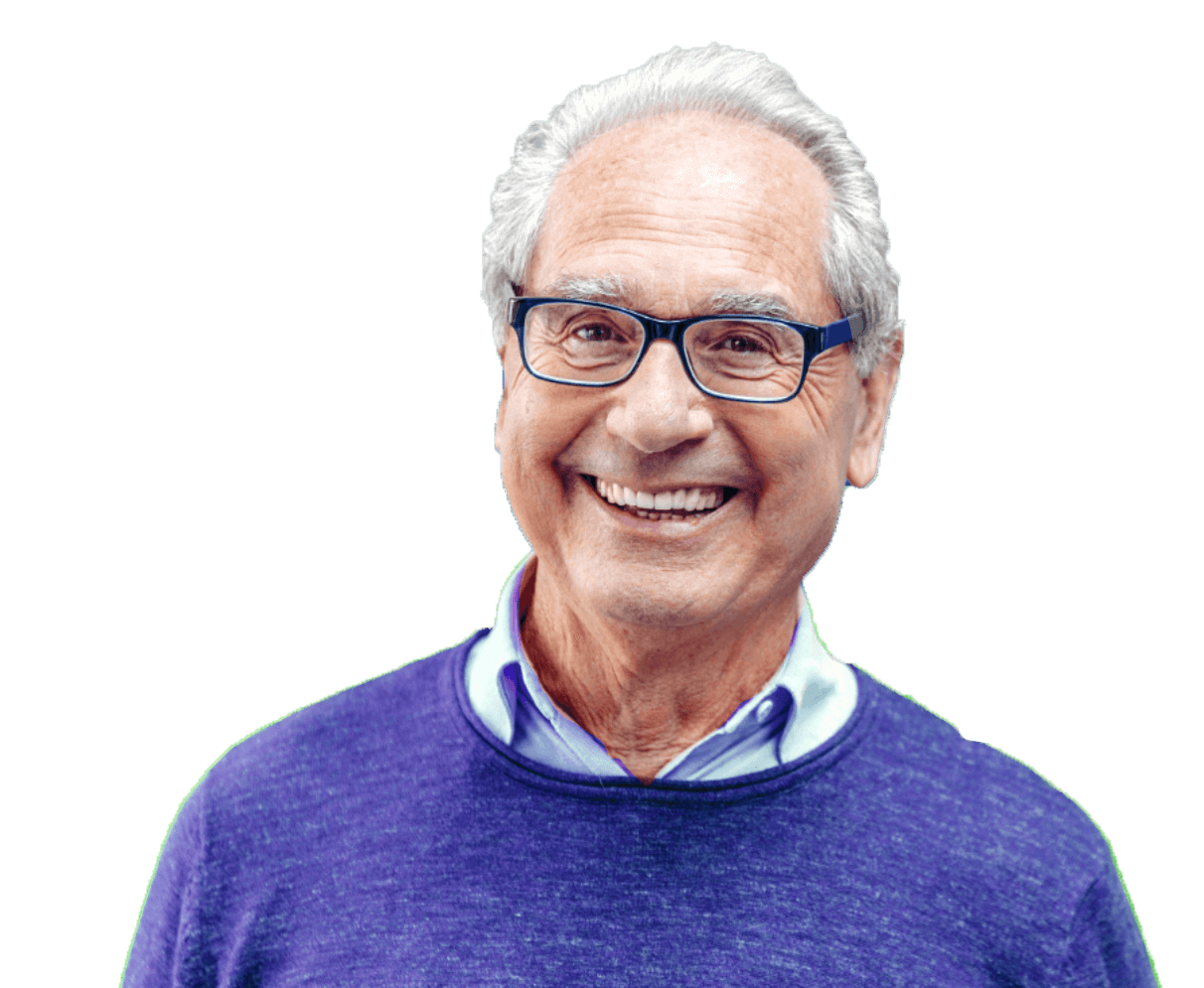
Euvon Jones:
My name is Euvon B. Jones. I was born in Baltimore, Maryland. My family actually originated from Lumberton, North Carolina. We have a very major presence in our family that is a mix between the Cherokee, which actually became the Lumbee Indians and also the African Americans.
My healthcare, because I was in an international union, was always paid for. So, I wasn't struggling trying to figure out, "Okay, how do I take care of the family? How do I have life insurance? How do we save money? How do we do those?" Those things were not our concern.
We just enjoyed living. And I know that was all by God's grace. I don't take credit for that.
But, that said, I never had time because being a businessman, I co-owned a business with my partner and then that, I wouldn't take time to go get screened health checks. I never got my annual checkups, did my blood work or all that stuff. Everything that has become germane to who I am now, I didn't do that. Didn't have time for it.
So, one thing led to another, and at the age of 59 years old, I got diagnosed with stage 4, metastatic prostate cancer. I didn’t even think about cancer very much.
I never had time because it was all about the business. Six days a week, 10, 12 hour days, that was our lifestyle. And we had fun, but I was very focused on being that provider, doing that guy thing, making sure that you provide for the family.
So when I got diagnosed, it really knocked me out of my seat. And actually, getting diagnosed with prostate cancer, I had to come to the table and honestly admit that I didn't even know what a prostate was. I didn't care. Well, if you're healthy, you're looking good.
But the thing I realized after going through the journey, initially, my wife started studying of what things can cause it. And then you start to learn that processed sugar, high-fructose corn syrup, environment, air quality, those things that can permeate and those things that we put in our body that are not good for us, can set our bodies up to losing the immune system not being able to fight.
So you become toxic and inflamed. And becoming toxic and inflamed, you can exercise all you want, do everything you want, but sooner or later the body's going in there fighting that fight, sooner or later, that fight's going to... You're going to start losing a little bit of ground.
And basically, the only reason I knew I needed to go in was because I developed a limp. My wife had gone to an orthopedic surgeon. That limp, she told me, "Why don't you go check him out and then see what's going on?" I just thought I wasn't exercising enough.
And that Monday was when my wife told me, "You better go in and see the orthopedic surgeon."
And from that escalation, it took some time, but in the midst of it, we finally got to the point where they diagnosed me. And when they diagnosed me with stage 4 metastatic prostate cancer, I was blown away. And I felt like my life had its great blessing of a life that God had bestowed on us was just blown up.
So, I guess I fast-forward to the reality that we needed somebody and we needed someone fast. And as I talked to my wife, she said, "Baby, the thing about this is you don't have this. We do."
So, I wasn’t really into this biopsy thing. And, after getting the biopsy, it confirmed that I was stage 4 prostate cancer. And I had this formidable doctor who is cataclysmic in the space, just so in tune with prostate cancer for years.
And her name was Dr. Nancy A. Dawson and finding her was a godsend. Because the reality for me was I found an oncologist, not a urologist. It's an interesting piece. And so, she in turn started me on a hormone blocker.
One of the reasons being diagnosed at stage 4, I was just so far gone that it didn't make, for me in my estimation, it didn't make sense to slice, dice, cut and burn me. So, I received no chemo, no surgery, no radiation. She put me on a hormone blocker. And that hormone blocker, what they call ADT therapy, I was on for a year and that brought my PSA way down, but then it started rising again.
And Janet and I freaked out. She said, "Neh, don't even worry. I got a lot of things up my sleeve." And she put me on, which was a clinical trial at the time, a procedure which was called immunotherapy.
And it's interesting because Janet, being the student that she is, the intellectual that she is, she started coming alongside of me. And as I was working, trying to get to retirement, she started studying. As she studied, she found those things that could help in our household. And then she started with a journal. That journal ended up being morphed into a book. It's called The Trial of Stage IV Prostate Cancer by Janet Jones, and it's sold all around the world.
And looking at this journey now, it's not just about me. It's about who we can speak into their lives and help them, and also about communicating the fact that I did not get screened.
I did not understand that, especially black men being more susceptible to prostate cancer, need to not wait to 50, but need to be screened by 40 years old. The propensity and the mortality rate for black men with prostate cancer is almost a two to one difference in reference to every other demographic.
So, this is not just a man's disease, but it tends to be a disease that disproportionately affects African American men more so than any other group. And I could be wrong, but I believe that one of the reasons is that we do not go and get screened.
And number two, we don't like clinical trials. And we know why we don't like clinical trials because we do not trust even with medical, having total medical care. Like I said, we had a great insurance, but we don't like, we don't trust doctors.
And it's an honest conversation. And everyone knows about the Tuskegee journey in reference to how they did that study and how that affected those men, but we can't stay there. We can't put up our tent and camp at, "Well, they did me wrong, man. And they..."
No, no. We got to keep moving on because if we don't, we're going to affect those things that mean the most to us. And those things that mean, are very meaningful to us is me being here more than 15 years later after being diagnosed to be able to be here with my children, our grandchildren.
So many of our grandkids weren't even born prior to me getting diagnosed. Soccer games, basketball games, concerts, my goodness, birthday parties, weddings. Just make your own list. It's amazing. This did not have to happen for me. The journey, I counted it all joy.
The education portion is essential. If you do not become a student of your diagnosis, you're saying that I trust everybody else to tell me what I need to do that's going to be good for my body.
Well, the problem is I didn't even trust myself to tell me what I needed to do that was good for my body. The thing about for us men is that we have to admit that we, number one, now I might not be talking to everybody, but we are very opinionated. We know what we want to do. Once we make our minds up, that's where we're focused. And a lot of that can permeate over to arrogance. And arrogance can get in the way of knowledge and wisdom.
My original PSA was diagnosed at 398. And today they tell me that I'm undetectable with a PSA of 0.0.
So, according to those numbers and their estimation from all the specialists in the room, they say, I can't say cancer free because I know too much about the body now and cancer's always trying to get in there. But I got a lot of warriors inside of me fighting.
Many times I can get hot flashes, which just makes my... My wife is just so positively in a great place when that happens because she looks at me and she says, "See?"
But other than that, I didn't have a tremendous amount of side effects from the ADT or the hormone blockers. And in reference to receiving the Provenge when you're in the chair, collection center, and also when they put it back in you, you can have night hot, basically cold sweats.
You can be upset on your stomach, you can get inundated and they can need to cover you with a blanket, but that's only while you're in the chair receiving that process. After that, no side effects at all.
So, for me, I haven't experienced tremendous side effects. And by the grace of God, you deal with the things that happen with your libido, but the bottom line is that there's tools.
So, bottom line, you can still live a full life. So I'm quite blessed.
This video was produced with the generous support of Dendreon Pharmaceuticals