

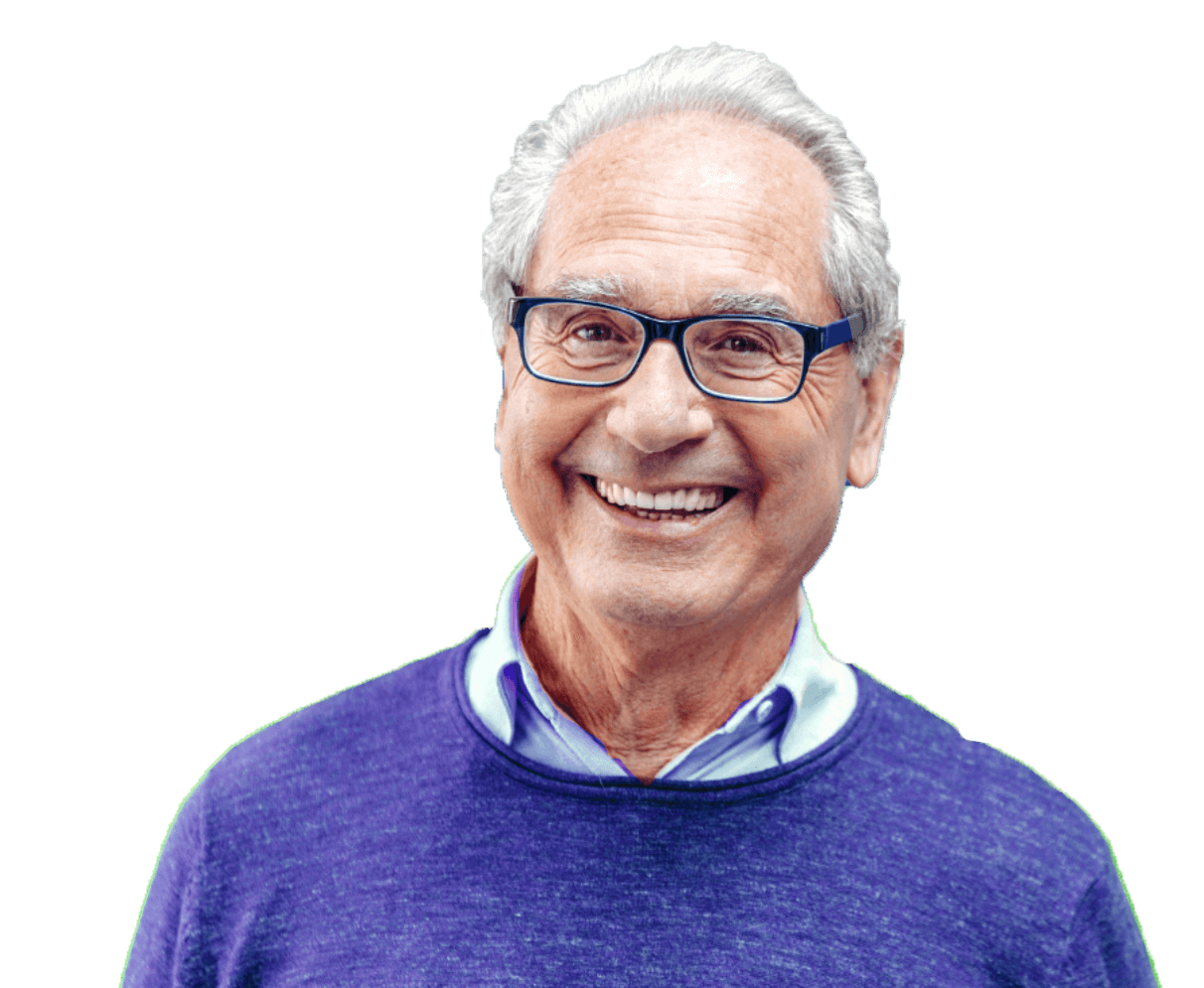
Mike Mason shares how an unexpected diagnosis of metastatic prostate cancer led him to pursue an aggressive treatment approach, including hormone therapy, chemotherapy, and radiation, while relying on the support of his family and medical team. He emphasizes the importance of seeking expert opinions, building a strong support system, staying grounded through uncertainty, and making the most of each day despite living with advanced prostate cancer.
My name's Mike Mason. I'm a family practice physician. Just over three years ago, I had my first PSA test when I turned 50, and my first PSA level was about 170, which that's quite a bit above the normal range. And so I was, very shortly thereafter, diagnosed with prostate cancer. And like I said, that was just over three years ago.
My wife was definitely there. She was a huge support for me during that time. At the time, I was mostly in shock because this was really quite surprising. I actually felt fine. This was just a screening test, and it was quite unexpected, to be honest with you. And not only did I find out I had prostate cancer, but I found out I had metastatic prostate cancer, and so the treatments at that time were a little more limited.
I had two kids at that time who were 15 years old, 15-year-old twins, so it was a pretty devastating diagnosis for me at the time. For a good week there, I was just floored and just stunned. And certainly, with the help of my wife and many of my friends, it took some time to learn to accept it and move on, and start talking about treatment. Certainly, several of my physicians were very helpful with that. At the time, I do remember my urologist being very, very somber when he was telling me about my biopsy results and everything. And so, like I said, it certainly took me aback, really took the wind out of my sails at that time just really tremendously.
And then you asked what kind of treatment options did I have. At that point, almost immediately, I went on anti-androgen therapy with Lupron injections, but that takes a little time to kick in. I actually ended up getting enrolled in a study doing chemotherapy early in the disease. And certainly, for my chemotherapy, I definitely had some side effects, mostly some fatigue and nausea and some intestinal upset. I went through, let's see, five cycles of chemotherapy. Each cycle was three weeks long, so it took several months to do that, and then kept going on the androgen-deprivation therapy.
Let's see, a year and a half after I was diagnosed, I also ended up doing a series of radiation therapy. The radiation therapy was actually very, very easy. Towards the end, I definitely got a little bit of fatigue, but nothing too severe. It was pretty easy going through that.
About seven, eight months after I started the androgen-deprivation therapy, my PSA level actually dropped down to being undetected, and has been that way since then. I stopped the androgen-deprivation therapy almost a year ago, and my PSA is still undetectable, although I don't really expect that to last. And at some point, we'll go back on some therapy again, perhaps another round of radiation therapy. But for right now, I'm doing very well. Got to be very thankful for that.
So, for me, the treatment was certainly not typical treatment. Certainly, the androgen deprivation was the standard treatment, and so, obviously, I went ahead and did that. Enrolling in this study to do chemotherapy was definitely non-standard therapy, and certainly, at the time and I don't believe now, is standard treatment for metastatic prostate cancer. And, obviously, need more data to see if that's really the way to go, so that was definitely non-standard. I happened to know an oncologist who specializes in prostate cancer, and this was offered as possibly being helpful. But, obviously, it's a study so, at the time, it certainly wasn't very clear if this would be helpful or not for my case.
Also, it was a little odd to also do the radiation therapy. That isn't exactly standard. It's not way out of bounds, but it's not exactly standard therapy for where I was. So, definitely could say we treated my cancer a little more aggressively than the standard treatment, and remains to be seen if that was the right decision or not. Got to wait awhile for the study's results to come back and see if this was actually worthwhile, or who knows? Maybe I should have just done the androgen-deprivation therapy alone, but I can't complain with how I'm doing right now, so I really don't have any regrets.
At the time, I certainly leaned a lot of my physicians and my wife. I certainly felt compelled, to a certain degree, to treat the cancer as aggressively as was reasonable, and so probably the biggest thing that guided my decision-making when these other offers of doing a study were presented. I felt I should err on the side of treating it pretty aggressively since I'm relatively young.
Really, my life has gotten back to kind of like it was every day. I don't know. Mentally, if I'm not careful, I feel fine, and I start to forget that I have prostate cancer. It certainly is not in my mind hour to hour. One little trick I do is almost for sure my prostate cancer will come back, and so almost every day I have to remind myself, "Cancer's going to come back. Don't get too comfortable." Enjoy your life. Enjoy what you have, but don't fall into the trap of just thinking that everything is always going to be fine, even though you feel great right now.
I can't get my hopes up too high for the long term. I have to keep myself grounded because, like I said, if I just go based on how I feel, I'm fine. There's nothing wrong with me. And I just try to keep myself even keeled, and just always remind myself, "Just plan on the cancer coming back." That way, when it does, I'm not too disappointed. It's just another barrier to cross and get through.
For me, I'm not sure if I have a tremendous amount of advice. Like I said, I'm happy with the path I chose. I think anyone in this situation is going to freak out a little bit. I think that's totally necessary. I think you have to, to a certain degree, to come to terms with your new reality on life, and being stressed and concerned is all part of the process for coming to terms with your new reality.
One thing I would like to remind myself is everyone is living in a bit of a fantasy. Even if you're 20 years old, you think you're going to live forever, and obviously, you're not. And I just have a more tangible concern about my issues, whereas most people, it's more nebulous, and no one knows what's going to happen, what their future holds. When this happens, you have a little more narrow path, a little more clear about potentially what's going to get you. And so probably the biggest thing I'd say is try to keep an even keel through it. No matter what happens, enjoy the life you have.
Oh, I think having a support system is critical. I would say if you don't have a support system, definitely reach out to people to form that support system. Going through this yourself would have been incredibly difficult. I don't think I could have gotten through it all by myself. You definitely need shoulders to cry on and people to bounce things off of, and really just people to be there. Certainly, my wife was a huge, huge, huge help, but my friends and family were incredibly supportive, too. Yeah, I can't imagine going through it alone. And if you are going through it alone, I think it's critical you reach out and get support.
I have to say, as part of this, I reached out to a lot of friends I hadn't spoken to in a couple years, and some people even longer than that. Universally, I just got so much support and love back that it was incredibly worth it. In fact, I'd say it was very useful. In a way, having cancer was helpful. It helped me reconnect with some old friends. It just provided that stimulus in life to not be so complacent in certain aspects of our life. And so, to some degree, it did help me get out there and grab the bull by its horns, and live my life to the fullest of that time. One thing that kind of dampened that is shortly after I was diagnosed, COVID came around. So that certainly impaired some of my social interactions, but obviously, there's phone and video and everything to get through COVID times.
I had several oncology opinions, and some of them were specialists at university hospitals. I actually got conflicting advice, "Would it be a good idea to do this? Would it not be?" And so I had to sift through what was known about the treatment, and what the potential benefits and the risks were, so it was something I just had to kind of sift through. Certainly, got a lot of advice, but a lot of it came down to where I thought I was in my life. If I was in a lot worse health, if I was a lot older, I might not have made these same decisions. If I didn't have teenage kids, maybe I would have made different decisions. That's hard to say, but a lot of it just had to do as far as how aggressive I thought we should treat this with the stage I was in my life, in both health and just being a parent and being a husband.
Definitely. I mean, certainly, the first several weeks was a huge transition just coming to terms with the diagnosis. It takes some time. You're not going to instantly come to terms with it. It takes a lot of thought, a little bit of grief to get through that. But I would say I came out of the other end a better person, a stronger person, as I've said before, certainly more focused on enjoying what time I have, and trying to make the most of everything that's been given to me through my life.
The funny thing is I feel myself drifting back towards the person, to a certain degree, not entirely, but drifting back towards the person I was before the diagnosis, only because it's been over three years now. A lot of time has passed. I feel great. My PSA is undetectable, and so it's easy to fall into your old patterns. And like I said, that's one reason why I try to keep myself grounded and remind myself, "Just plan on the cancer coming back." That way, you really can't be too, too disappointed. And also, it reminds me to, again, try to live my life to its fullest right now. I think that's good advice for everybody, though. No one's going to live forever.