

Metastatic hormone sensitive prostate cancer (mHSPC) is advanced prostate cancer that occurs in two situations:
- Men that have prostate cancer outside the prostate at the time of diagnosis (de novo mHSPC)
- Men that have had prior local therapy for prostate cancer (ie. after radiation therapy or surgical removal) who then have recurrence of their prostate cancer in other organs (metachronous mHSPC)
Thankfully, over the last decade, we have had many advances in the treatment of mHSPC. In a discussion with Dr. Phil Koo (Chief Medical Officer of the Prostate Cancer Foundation), we considered four important clinical trial updates that were presented at the 2025 European Society of Medical Oncology (ESMO) annual meeting in Berlin, Germany.
ARANOTE – Age subgroup analysis
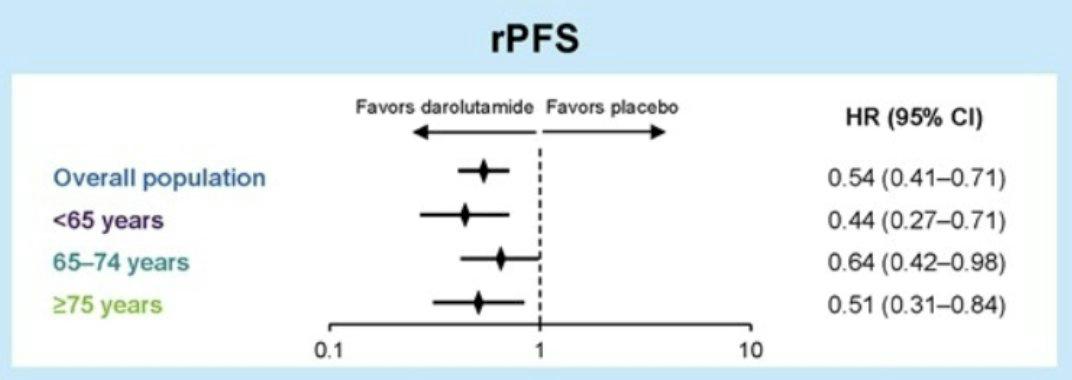
The ARANOTE trial was previously published in 2024 and showed that among all patients enrolled in the trial, the androgen receptor pathway inhibitor darolutamide + androgen deprivation therapy (ADT) significantly reduced a patient’s risk of disease progressing on imaging (rPFS) versus the control arm of placebo + ADT by 46%. This was accomplished with a favorable safety profile. Because ~60% of patients with prostate cancer are older than 65 years of age and 20% are older than 75 years of age, it is important to assess outcomes from ARANOTE by age groups.
At ESMO 2025, Dr. Fred Saad presented this data, showing that the significant rPFS benefit of darolutamide over placebo in the overall population was also consistently achieved across all age subgroups: < 65 years, 65-74 years, and >= 75 years:
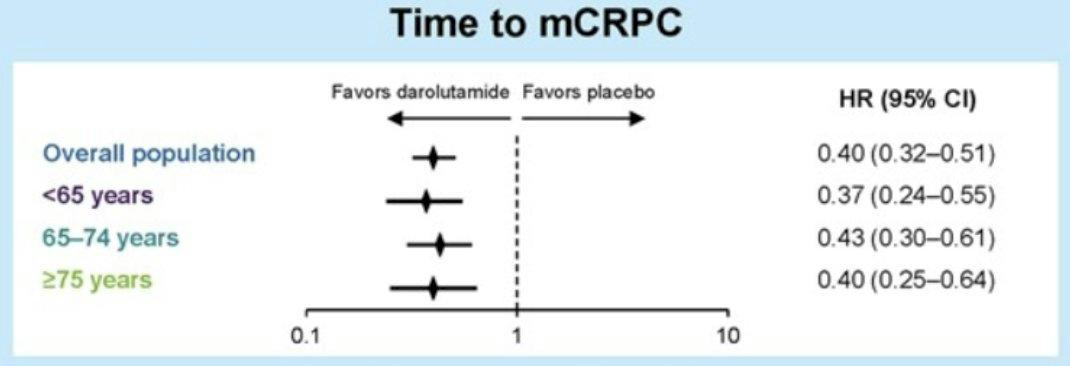
Another outcome assessed that favored darolutamide + ADT across all age groups was time to mCRPC, which is the time from which the treatment is no longer working as seen by an increase in PSA or worsening imaging results:
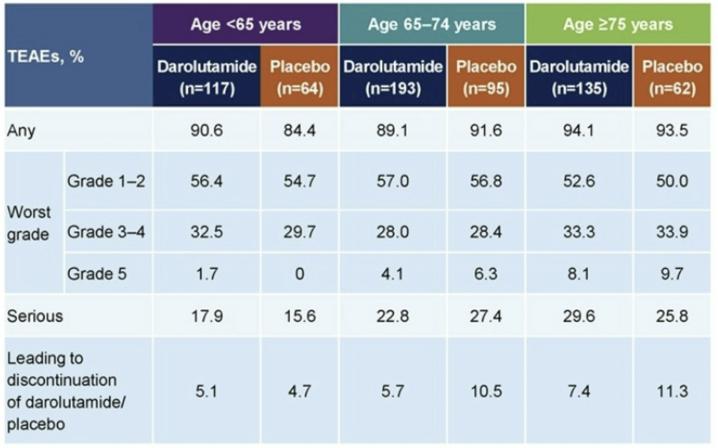
Finally, Dr. Saad showed that (as expected) the frequency and severity of side effects increased slightly with age, but with similar frequencies between darolutamide and placebo within each age subgroup:
What these results mean for patients and their caregivers: Regardless of a patient’s age in the ARANOTE trial, patients receiving darolutamide + ADT had a lower risk of disease progressing on imaging (rPFS) and improvement in time to the treatment no longer working (mCRPC). Importantly, this was not at the cost of worse side effects, as even older patients tolerated this treatment well. Since metastatic prostate cancer rates are higher as men get older (ie. 75-84 years of age), and older patients usually have more health problems (ie. diabetes, high blood pressure, etc), this data shows that older men can confidently discuss with their physician whether they are candidates for darolutamide + ADT – it works and it is safe.
ARAAT: Real-world PSA response for triplet therapy
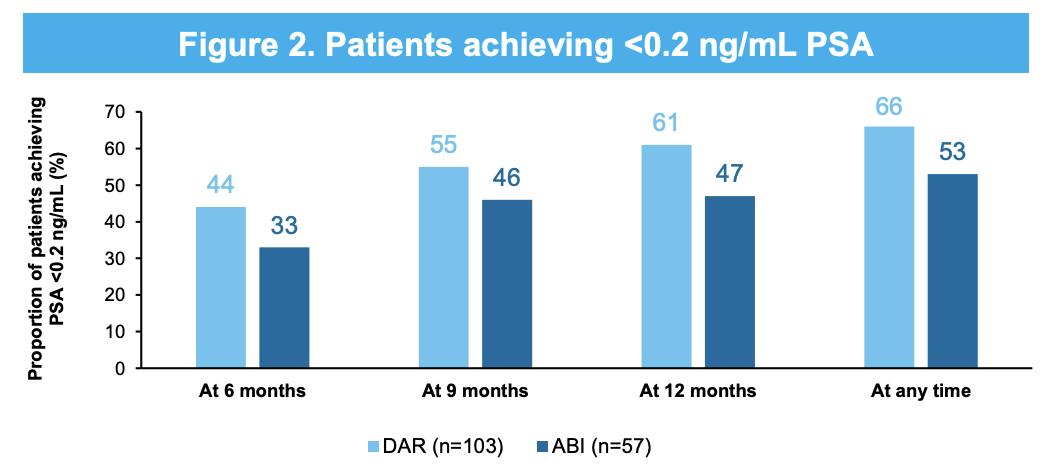
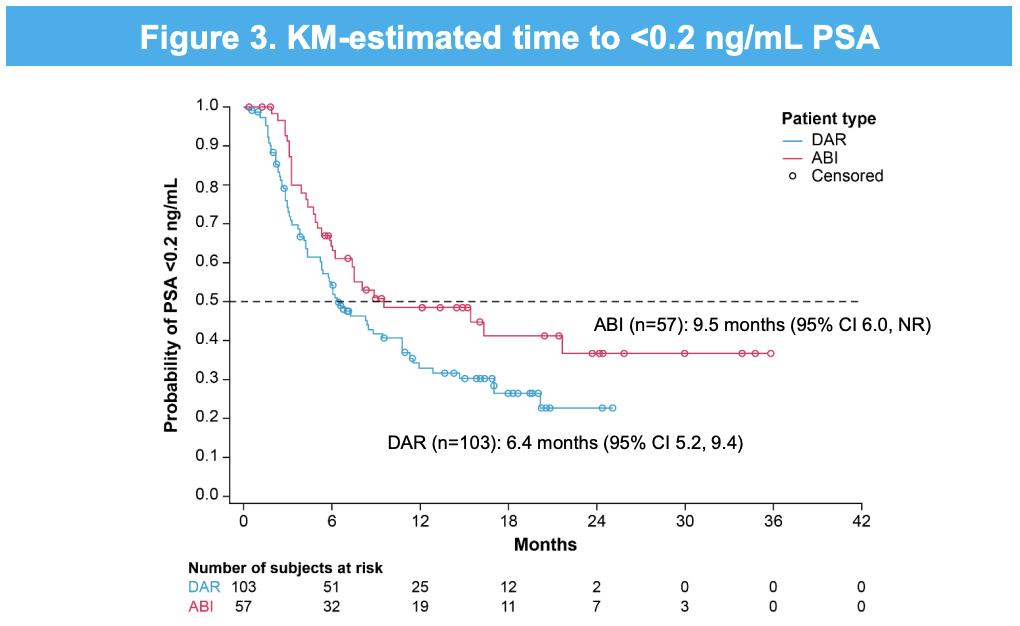
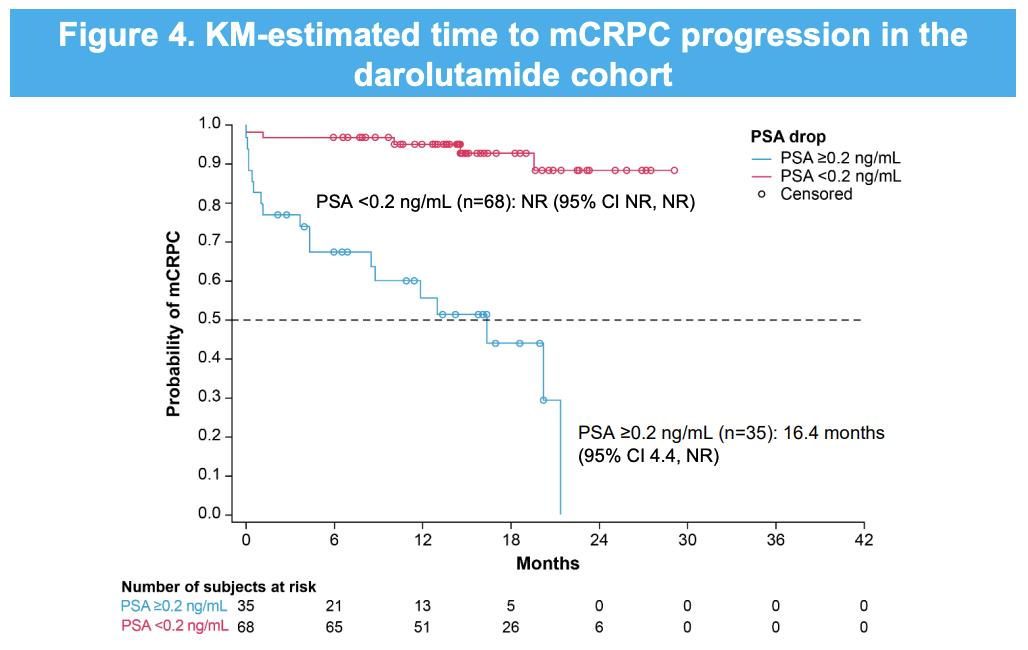
In patients with mHSPC, triplet therapy with abiraterone + ADT + docetaxel (PEACE-1 trial) and darolutamide + ADT + docetaxel (ARASENS trial) has been shown to improve cancer outcomes in phase 3 trials. However, data in the real-world for these two treatment options has been limited to date. At ESMO 2025 Dr. Alicia Morgans presented results of the ARAAT study assessing patients that started darolutamide + ADT + docetaxel or abiraterone + ADT + docetaxel triplet therapy. The key endpoints for this study were time to undetectable PSA (how long it takes for the PSA to reach <0.2 ng/mL) and time to mCRPC (time to the treatment no longer working).
ARAAT showed that an undetectable PSA was achieved by 66% of darolutamide + ADT + docetaxel patients and 53% of abiraterone + ADT + docetaxel patients:
Time to PSA < 0.2 ng/mL was shorter for darolutamide patients (6.4 months) than for abiraterone patients (9.5 months):
Patients receiving darolutamide who achieved a PSA < 0.2 ng/mL had a lower risk and longer time to mCRPC than those who did not achieve a PSA < 0.2 ng/mL, highlighting the importance of getting the PSA as low as possible, as quickly as possible:
What these results mean for patients and their caregivers: Some men with aggressive, high volume mHSPC benefit from and receive triplet therapy, which means they will receive 6 treatments of docetaxel chemotherapy. Based on this real world data from the ARAAT study, patients that received darolutamide as part of triplet therapy had improved time to undetectable PSA and time to mCRPC compared to patients receiving abiraterone. At the time of mHSPC diagnosis, be sure to talk to your treatment team about (a) whether you should receive triplet therapy for your prostate cancer and (b) whether you are healthy enough for chemotherapy.
ARASAFE
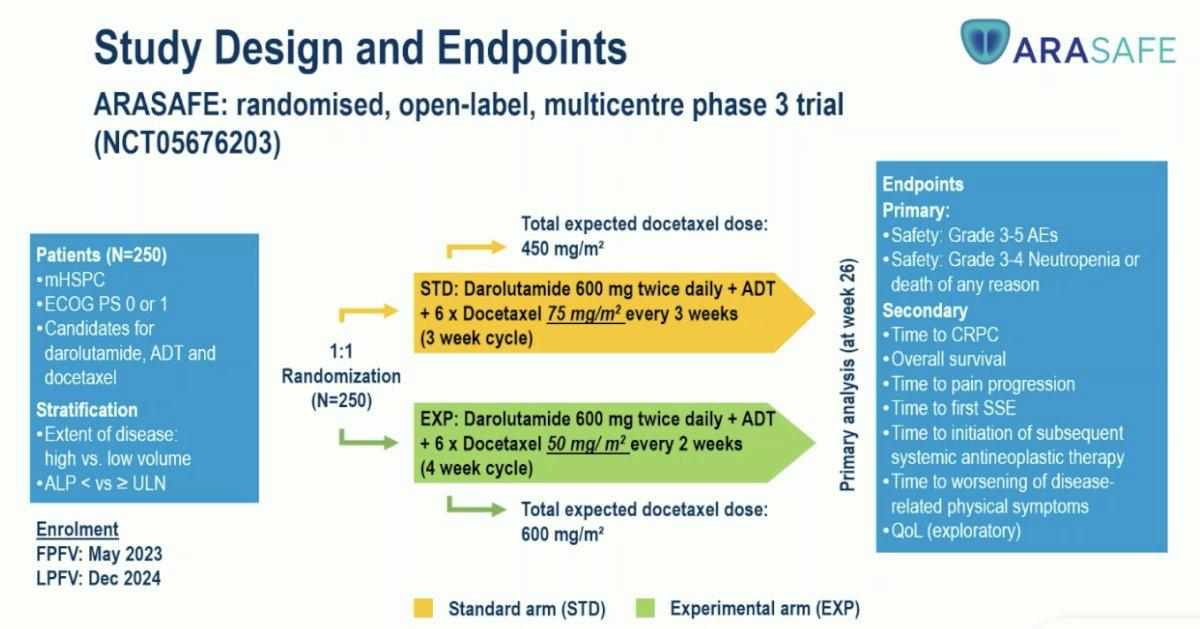
Triplet therapy with darolutamide for mHSPC includes darolutamide + ADT + docetaxel, with the chemotherapy traditionally given as 75 mg/m2 (the dose) for 6 treatments every 3 weeks. However, there are many reasons that patients who should receive chemotherapy either do not receive chemotherapy at all or are unable to complete all 6 cycles. Perhaps there are other ways we should be giving docetaxel chemotherapy that is less toxic? To assess this, the ARASAFE trial, presented at ESMO 2025 by Dr. Marc-Oliver Grimm, tested triplet therapy with darolutamide + ADT + docetaxel (75 mg/m2 for 6 treatments every 3 weeks) versus darolutamide + ADT + docetaxel (50 mg/m2 for 6 treatments every 2 weeks):
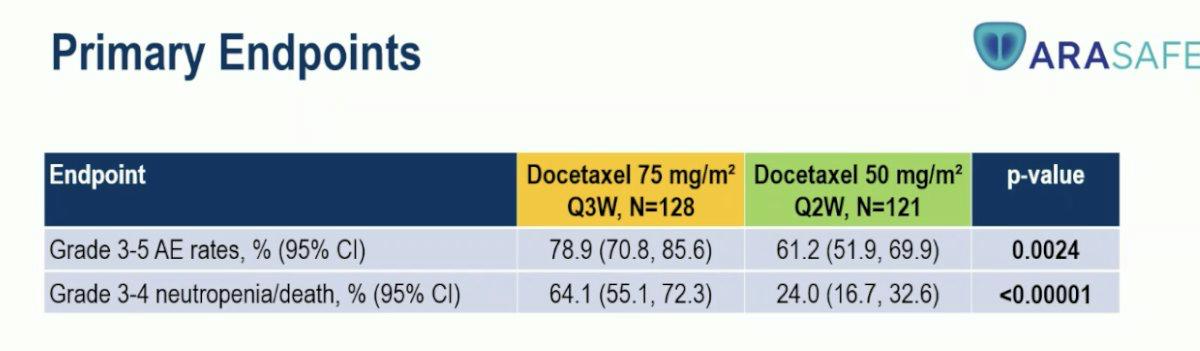
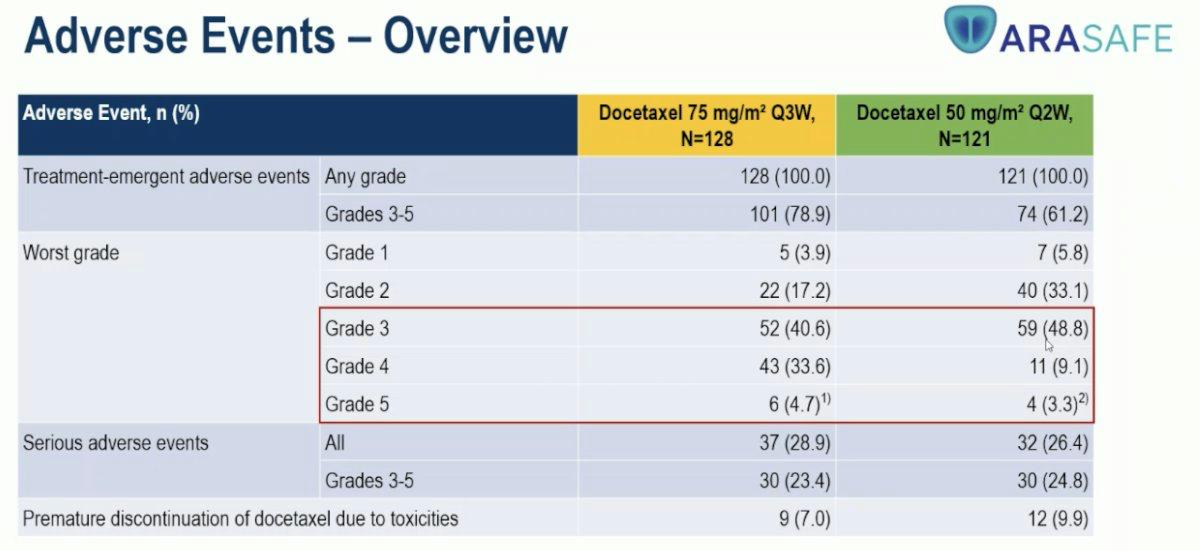
The primary endpoints were the incidence of grade 3–5 adverse events and safety, particularly rates of grade 3–4 neutropenia (low white blood cell count) or sepsis (blood stream infection). The primary endpoint showed a significant difference between treatments. Grade 3–5 adverse event rates were lower with the 50 mg/m² docetaxel dose (61.2%) compared to the 75 mg/m² docetaxel dose (78.9%). Similarly, the rate of grade 3–4 neutropenia or death was much lower with the 50 mg/m² docetaxel dose (24.0% vs 64.1%; p<0.00001):
What these results mean for patients and their caregivers: No patient is excited about the prospect of chemotherapy. However, for specific patients with mHSPC, they will benefit from chemotherapy based triplet therapy based on the data from several important trials. The ARASAFE trial showed that there may be a different way that we can give chemotherapy to make it better tolerated and with less side effects. Importantly, we will continue following this trial to ensure that the prostate cancer outcomes are not compromised with the 50 mg/m² docetaxel dose that are well established with the 75 mg/m² docetaxel dose.
LIBERTAS
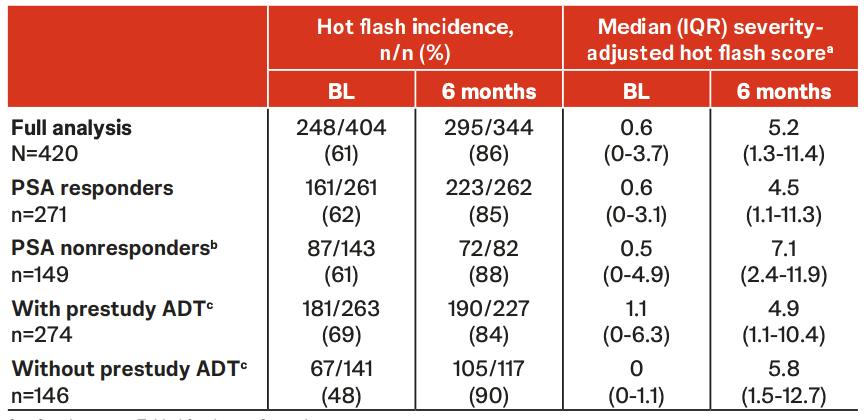
Hot flashes, an ADT-related side effect, can be very debilitating for patients, which negatively impact their quality of life. There is often a battle between decreasing treatment to alleviate side effects, while at the same time not compromising prostate cancer control. LIBERTAS is an ongoing ADT de-escalation study evaluating the hormone therapy apalutamide + intermittent ADT versus apalutamide + continuous ADT in mHSPC patients who have an excellent PSA response after initial treatment. At ESMO 2025, Dr. Morgans presented data from the initial 6 month treatment phase for the LIBERTAS trial. In this trial, a hot flash diary was collected at all visits and was completed for 7+ days consecutively prior to baseline, at 3 months, and at 6 months during the initial treatment phase. The most notable initial finding from LIBERTAS was that hot flash incidence increased substantially from baseline to 6 months:
Additionally, the peak hot flash severity increased from baseline to 6 months:
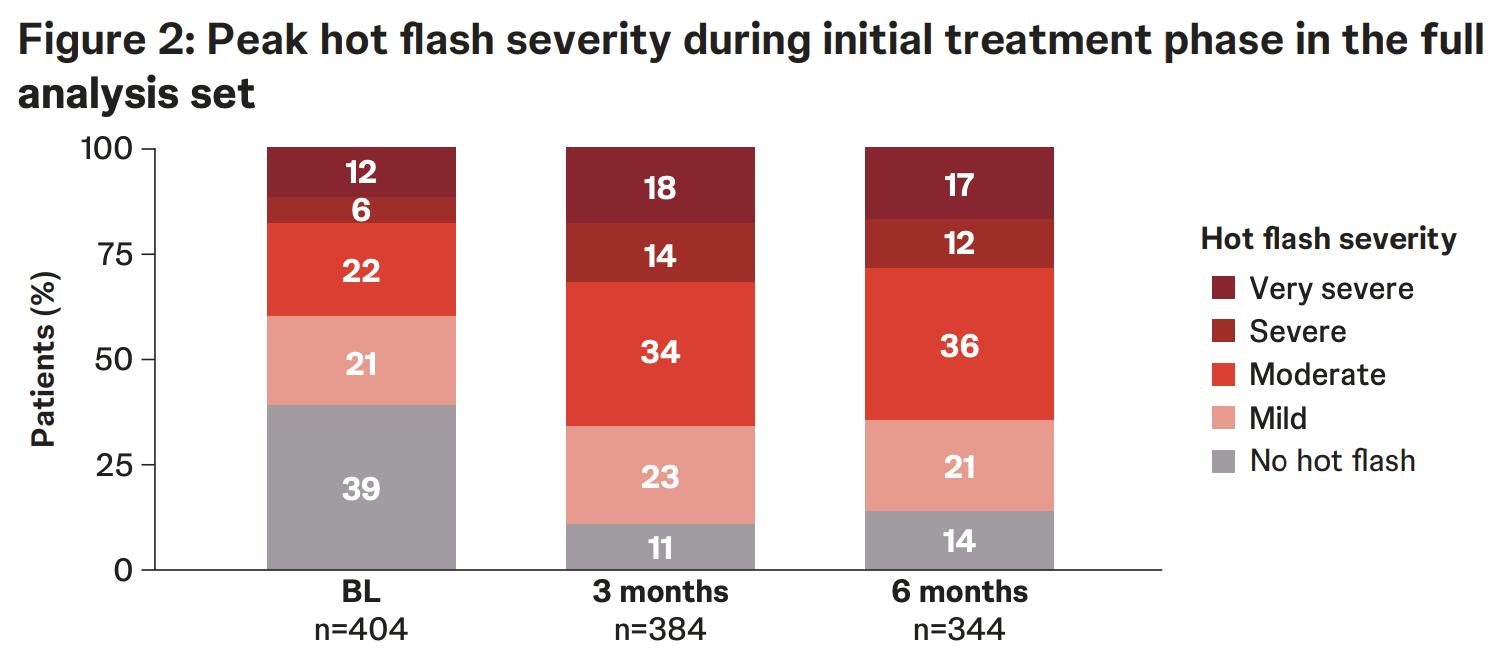
What these results mean for patients and their caregivers: This study shows us that almost all patients have worsening of hot flashes during the first 6 months of hormone therapy. You’re not alone! Although there is likely no perfect remedy for hot flashes, you can ask your physician about certain medications that may help. Especially when starting hormone therapy (and when we know hot flashes can be the worst), it is important to have a dedicated exercise program, which may help with hot flashes, but will also improve cardiovascular health, bone density, and maintain muscle mass. Of note, we will continue following data from the LIBERTAS trial to assess whether de-escalation of ADT in appropriate patients improves patient quality of life (ie. hot flashes).